Gum Treatment for Bleeding & Swollen Gums in Pune
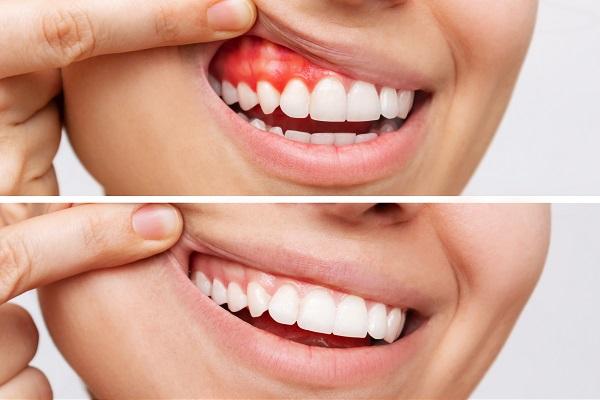
Healthy gums don't bleed. Bleeding is usually the first sign of gum disease, caused by plaque and tartar along the gum line. Hormonal changes such as pregnancy, some medicines and smoking can make it worse. Caught early, it's fully reversible.
What happens during treatment
- 1
Gum examination
The gums are checked and measured around each tooth, with X-rays if needed to check the bone.
- 2
Deep cleaning
Scaling and root planing remove tartar from above and below the gum line.
- 3
Home care plan
The right brushing technique, flossing and, if needed, a mouthwash for a short period.
- 4
Review
A follow-up visit to check that the gums have healed.
One to a few sittings depending on how advanced it is, followed by regular check-ups.
Aftercare
- Brush gently at the gum line twice a day with a soft brush
- Floss or use interdental brushes daily
- Don't stop brushing because gums bleed; bleeding reduces as they heal
- Quitting tobacco greatly helps gum health
Watch Dr. Sushma explain
Why do my gums bleed?
Gum disease, hormones, vitamins, medicines, tobacco and hard brushing: the common causes.
Common questions
Why do my gums bleed?
Most often because of plaque and tartar at the gum line (gingivitis). Hormonal changes, some medicines and vitamin deficiencies can also play a part.
Can gum disease be cured?
Gingivitis is fully reversible with cleaning and good home care. Advanced gum disease can be controlled so it doesn't get worse.
Is gum disease linked to other health problems?
Gum disease has been linked with conditions like diabetes and heart disease, which is another reason to treat it early.