
Painless Root Canal Treatment on Sinhgad Road, Pune
A root canal treatment removes infection from inside a tooth, stops the pain, and saves your natural tooth instead of removing it. With good local anaesthesia it usually feels no worse than having a filling.
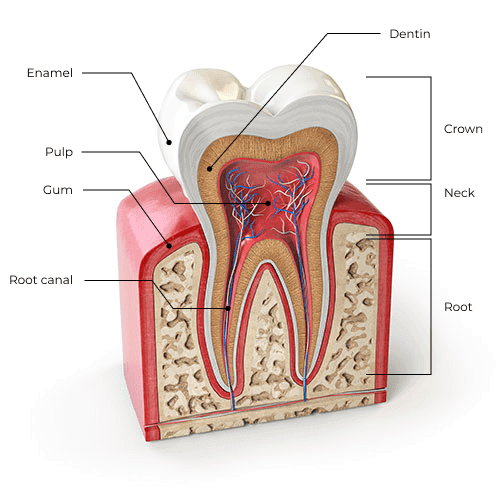
What happens during treatment
- 1
Diagnosis
Examination and an X-ray show how far the infection has spread.
- 2
Numbing
Local anaesthesia makes the tooth and surrounding area completely numb.
- 3
Cleaning the canals
The infected pulp is removed and the root canals are cleaned and shaped.
- 4
Sealing
The canals are filled and sealed so bacteria can't get back in.
- 5
Crown
A tooth that has had a root canal is weaker, so a crown is usually placed to protect it and restore its look.
Usually 1–2 visits of 45–90 minutes, plus a visit for the crown.
Aftercare
- Some tenderness for a few days is normal; take painkillers if advised
- Avoid chewing hard food on that side until the crown is fitted
- Brush and floss as normal
- Get the crown done on time; an uncovered tooth can crack
Watch Dr. Sushma explain
Saving a front tooth with a root canal
Mild pain turned out to be an infection; RCT and a crown saved the tooth.
Common questions
Is root canal treatment painful?
The treatment itself is done under local anaesthesia, so it shouldn't hurt. Most of the pain people associate with RCT is from the infection beforehand, which the treatment relieves.
Isn't it easier to just remove the tooth?
Extraction is quicker on the day, but losing a tooth leads to shifting teeth, chewing problems and bone loss, and replacing it later costs more. Saving your own tooth is usually the better choice.
Why do I need a crown after RCT?
Treated teeth become more brittle. A crown protects the tooth from cracking and lets you chew normally.